Ball joints are small components with a massive impact on vehicle safety, handling, and steering accuracy. Found in the suspension and steering systems, they serve as flexible pivot points that allow wheels to move up and down with the suspension while turning left and right with the steering. To understand why ball joints are so critical — and why quality matters — it’s important to look closely at their construction. This article explains the main elements of a ball joint: housings, studs, bearings, and boots, how they work together, and what happens when one part fails.
What Is a Ball Joint?
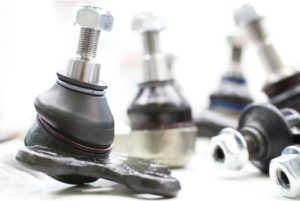
A ball joint is essentially a spherical bearing that connects the control arm to the steering knuckle. Its design allows multi-axis movement while supporting heavy loads and maintaining precise wheel alignment. Because ball joints operate under constant stress, their internal construction must be both strong and wear-resistant.
Main Components of a Ball Joint
A typical automotive ball joint consists of four primary elements:
-
Housing
-
Ball stud
-
Bearing surface
-
Protective boot
Each part plays a specific role in durability and performance.
Ball Joint Housing
The housing is the outer shell that contains all internal components. It is usually made from forged or hardened steel.
Functions of the Housing
-
Provides structural strength
-
Holds internal parts in correct alignment
-
Absorbs loads from braking, cornering, and road impacts
| Housing Type | Material | Key Benefit |
|---|---|---|
| Stamped steel | Carbon steel | Lightweight, cost-effective |
| Forged steel | High-strength alloy | Maximum durability |
| Threaded housing | Hardened steel | Easy installation/replacement |
A strong housing prevents deformation that could cause looseness or misalignment over time.
Ball Stud (Ball Pin)
The ball stud is the heart of the ball joint. It consists of a spherical ball attached to a tapered shaft that fits into the steering knuckle.
Key Characteristics
-
Precision-machined spherical surface
-
Heat-treated for wear resistance
-
Tapered design ensures tight fit
| Stud Feature | Purpose |
|---|---|
| Spherical head | Allows multi-directional movement |
| Tapered shaft | Secure mounting |
| Threaded end | Fastening with nut |
Any wear or deformation of the ball stud directly affects steering accuracy and vehicle stability.
Bearing Surface
The bearing sits between the ball stud and housing, allowing smooth rotation while minimizing friction.
Common Bearing Materials
-
Polymer liners
-
Metal-on-metal surfaces
-
Composite bearing inserts
| Bearing Type | Friction Level | Durability |
|---|---|---|
| Polymer liner | Low | High |
| Metal-on-metal | Medium | Very high |
| Composite | Very low | High |
The bearing must withstand constant movement and load without excessive wear, making material choice critical.
Protective Boot
The boot seals the ball joint from dirt, water, and road contaminants while keeping lubricant inside.
Why the Boot Matters
-
Prevents corrosion
-
Maintains lubrication
-
Extends service life
Boots are usually made from rubber or synthetic elastomers designed to remain flexible under temperature changes. A torn or cracked boot often leads to rapid ball joint failure.
How These Parts Work Together
When driving, all components interact continuously:
-
The housing keeps everything aligned
-
The ball stud pivots with steering input
-
The bearing reduces friction
-
The boot protects internal surfaces
This cooperation allows precise steering while supporting vehicle weight.
Common Causes of Ball Joint Failure
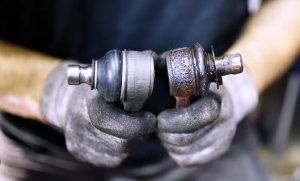
Understanding construction also explains failure modes:
-
Worn bearings due to lack of lubrication
-
Corroded studs from damaged boots
-
Deformed housings from impact or overload
Regular inspection can prevent costly suspension damage.
Maintenance and Quality Considerations
To ensure long service life:
-
Inspect boots regularly
-
Replace worn joints promptly
-
Use high-quality components designed for your vehicle
For dependable parts and a wide selection, visit: Buy Ball Joint online
Conclusion
Ball joint construction is a precise balance of strength, flexibility, and protection. The housing provides structure, the stud enables movement, the bearing ensures smooth operation, and the boot preserves internal integrity. When all elements work together correctly, ball joints deliver accurate steering, stable handling, and long-term reliability. Understanding how these components function helps drivers and technicians make better maintenance and replacement decisions. For safety, performance, and durability, always choose quality parts and buy Ball Joint online from a trusted source.