Air suspension systems have become a defining feature of modern vehicles, especially in luxury cars, SUVs, electric vehicles, and heavy-duty models. Beyond ride comfort and adjustable height, air suspension plays a direct role in how a vehicle behaves dynamically and how forces are transferred through the chassis. Understanding the interaction between air suspension, vehicle dynamics, and chassis flex explains why these systems can dramatically improve stability, handling, and overall driving confidence.
Basics of Vehicle Dynamics and Chassis Flex
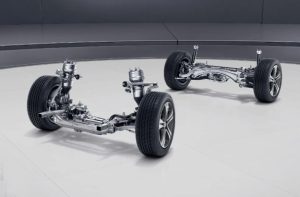
Vehicle dynamics describe how a car responds to inputs such as steering, braking, acceleration, and road irregularities. Chassis flex refers to the slight bending or twisting of the vehicle’s structure under load.
Key dynamic forces acting on a vehicle:
-
Vertical forces from bumps and road unevenness
-
Lateral forces during cornering
-
Longitudinal forces during braking and acceleration
-
Torsional forces that cause chassis twist
A suspension system must manage these forces while keeping tires in optimal contact with the road. Air suspension is particularly effective at this task.
How Air Suspension Differs From Traditional Springs
Unlike steel coil springs with a fixed rate, air springs adjust stiffness and ride height by changing air pressure.
Comparison of Suspension Types
| Feature | Coil Spring Suspension | Air Suspension |
|---|---|---|
| Spring rate | Fixed | Variable |
| Ride height | Constant | Adjustable |
| Load adaptation | Limited | Automatic |
| Response to dynamics | Passive | Semi-active or active |
| Effect on chassis stress | Less controlled | Better distributed |
This adaptability allows air suspension to respond dynamically to changing driving conditions.
Interaction With Vehicle Dynamics
Cornering and Lateral Stability
During cornering, lateral forces try to roll the vehicle body. Air suspension systems counteract this by:
-
Increasing pressure in outer air springs
-
Reducing body roll
-
Maintaining consistent tire contact
This improves grip and steering precision, especially in taller vehicles like SUVs.
Braking and Acceleration
Under heavy braking, weight shifts forward; during acceleration, it shifts rearward. Air suspension manages this by:
-
Adjusting pressure to reduce dive and squat
-
Keeping suspension geometry closer to ideal
-
Improving braking stability and traction
Air Suspension and Chassis Flex
Chassis flex is unavoidable, but uncontrolled flex negatively affects handling and comfort.
How Air Suspension Helps Manage Flex:
-
Load distribution: Evenly spreads forces across mounting points
-
Reduced peak stress: Softer initial response absorbs impacts before they reach the chassis
-
Adaptive stiffness: Stiffens under dynamic loads, reducing excessive flex
This interaction protects the chassis from fatigue over time and enhances structural longevity.
Ride Height Control and Aerodynamics
Air suspension actively alters ride height depending on speed and driving mode.
Effects on Vehicle Dynamics:
-
Lower ride height at high speeds reduces center of gravity
-
Improved aerodynamics and stability
-
Reduced chassis movement and wind sensitivity
| Driving Condition | Suspension Adjustment | Dynamic Benefit |
|---|---|---|
| Highway speeds | Lowered ride height | Stability, efficiency |
| Urban driving | Normal height | Comfort |
| Heavy load | Raised pressure | Level chassis |
| Off-road | Increased height | Clearance, articulation |
Interaction With Electronic Control Systems
Modern air suspension systems work closely with:
-
Stability control (ESC)
-
Adaptive dampers
-
Steering systems
-
Drive mode selectors
Sensors continuously monitor body movement, wheel position, and chassis acceleration. The control unit then adjusts air pressure in milliseconds, directly influencing vehicle dynamics in real time.
Benefits for Different Vehicle Types
SUVs and Crossovers
-
Reduced body roll
-
Improved load handling
-
Enhanced off-road and on-road balance
Electric Vehicles
-
Compensation for heavy battery weight
-
Improved chassis balance
-
Better energy efficiency through ride height control
Luxury and Performance Cars
-
Smooth ride without sacrificing handling
-
Reduced noise and vibration transfer
-
Precise control over chassis movement
Signs of Poor Interaction Between Air Suspension and Chassis
When air suspension components wear or malfunction, vehicle dynamics suffer.
Common symptoms include:
-
Excessive body roll
-
Uneven ride height
-
Increased chassis vibration
-
Delayed steering response
-
Frequent compressor operation
These issues increase chassis stress and reduce driving safety.
Maintenance Factors That Preserve Dynamic Performance
To keep air suspension working harmoniously with the chassis:
-
Inspect air springs for leaks or cracks
-
Ensure sensors and control modules are calibrated
-
Address compressor or valve issues early
-
Replace worn components in pairs
-
Use high-quality, vehicle-specific parts
Choosing Quality Air Suspension Components
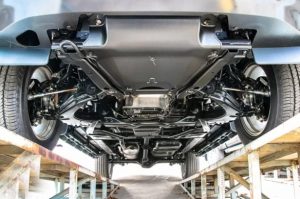
Because air suspension directly influences vehicle dynamics and chassis behavior, component quality is critical. Inferior parts can disrupt force distribution, increase chassis flex, and reduce handling precision.
For reliable, compatible components designed to maintain proper vehicle dynamics, you can Buy Air Suspension online. This ensures correct fitment, durability, and long-term performance.
Conclusion
Air suspension is far more than a comfort feature — it is an integral part of modern vehicle dynamics and chassis control. By continuously adapting spring rate and ride height, air suspension manages lateral, longitudinal, and vertical forces while minimizing unwanted chassis flex. This results in improved stability, better handling, reduced structural stress, and a more refined driving experience.
As vehicles become heavier, faster, and more technologically advanced, the interaction between suspension systems and chassis design grows increasingly important. Maintaining air suspension properly and choosing high-quality replacement components ensures your vehicle retains its dynamic balance, structural integrity, and driving confidence in every situation.